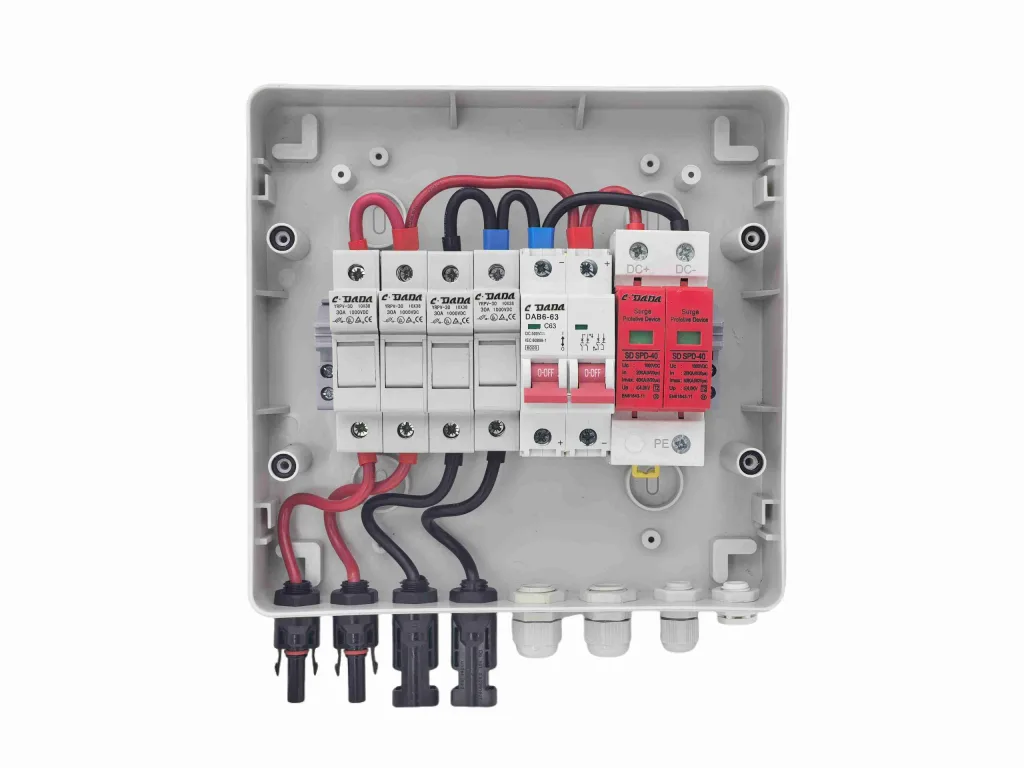
In today’s electrical installations, safety and reliability are no longer optional. With more electrical appliances, sensitive equipment, and higher power demand, choosing the right protection device is critical. This is where the comparison of RCBO vs RCCB becomes important. Although both devices are designed to protect people from electric shock caused by leakage current, their functions and applications are not the same. To make a correct decision, it is essential to understand how each device works and where it fits best in an electrical system.
To begin with, an RCCB, or Residual Current Circuit Breaker, is designed specifically to protect people from electric shock. It works by monitoring the balance between the live and neutral currents. When it detects a leakage current above a preset value, usually 30 mA for personal protection, it trips and disconnects the circuit.
However, it is important to understand that an RCCB only responds to leakage current. It does not provide protection against overload or short circuit. For this reason, an RCCB must always be used together with an MCB or MCCB. In practical installations, RCCBs are commonly applied in residential and commercial buildings where shock protection is the main concern.

Moving one step further, an RCBO, or Residual Current Circuit Breaker with Overcurrent Protection, combines the functions of an RCCB and an MCB into one device. This means it can protect against leakage current, overload, and short circuit at the same time.
Because of this integrated design, RCBOs can simplify wiring and reduce the number of devices required in a distribution board. In modern electrical panels, especially where space is limited, RCBOs are increasingly preferred. From a safety point of view, RCBOs offer more complete protection for both people and electrical circuits.
When comparing RCBO vs RCCB, the core difference lies in the scope of protection. An RCCB only detects leakage current, while an RCBO detects leakage, overload, and short circuit. This difference directly affects how each device is used in real applications.
Another key difference is installation complexity. An RCCB requires additional protective devices, which increases wiring work and panel space. An RCBO, on the other hand, simplifies the system by combining functions. From a maintenance perspective, RCBOs also reduce the number of components that need regular testing.
To choose correctly, it is helpful to look at typical applications. In small residential systems, RCCBs combined with MCBs are still widely used because they offer reliable protection at a lower initial cost. This solution works well where space is not a major limitation.
In contrast, RCBOs are commonly used in modern homes, offices, and commercial buildings. They are especially suitable for circuits that supply important equipment, such as air conditioners, servers, or medical devices. In industrial panels, RCBOs are often selected for individual branch circuits to improve selectivity and reduce downtime.
Beyond basic definitions, several technical factors should be considered. One key factor is leakage sensitivity. Common ratings include 30 mA for personal protection and higher values such as 100 mA or 300 mA for fire protection. Both RCCBs and RCBOs are available in different sensitivity levels.
Another important point is nuisance tripping. Improper selection or poor-quality devices may trip unnecessarily due to harmonics or transient currents. Therefore, coordination and selectivity must be considered carefully, especially in complex systems. Compliance with international standards such as IEC is also essential to ensure consistent performance and safety.
From a cost perspective, RCCBs are generally less expensive than RCBOs. However, when combined with MCBs, the total system cost may increase. RCBOs have a higher unit price, but they can reduce installation time and save panel space.
In terms of long-term reliability, both devices can perform well if they are properly selected and installed. However, RCBOs offer a more compact and organized solution, which can reduce wiring errors and simplify future maintenance. Over time, this can lead to lower operating costs and improved system reliability.

When deciding between RCCB and RCBO, several practical questions should be asked. What level of protection is required? How much space is available in the distribution board? What is the budget? Is the installation new or a retrofit?
If the priority is basic shock protection at a lower cost, an RCCB combined with MCBs may be sufficient. If the goal is complete protection, simplified wiring, and a modern design, RCBOs are often the better choice. Ultimately, the right decision depends on balancing safety, cost, and system requirements.
From a manufacturer’s point of view, not all RCBOs and RCCBs are the same. The quality of materials, accuracy of tripping mechanisms, and testing processes all have a direct impact on performance. High-quality devices are less likely to cause nuisance tripping and more likely to operate correctly under fault conditions.
Choosing products from an experienced and reliable manufacturer ensures compliance with standards and consistent long-term performance. This is especially important in commercial and industrial projects, where safety and reliability cannot be compromised.
In summary, the difference between RCBO vs RCCB is clear when their functions and applications are carefully examined. RCCBs focus on leakage protection, while RCBOs provide a more comprehensive solution by adding overload and short-circuit protection. Both devices play an important role in electrical safety, but their suitability depends on the specific application.
For modern installations that demand higher safety, compact design, and simplified wiring, RCBOs are often the preferred solution. For more traditional systems with budget constraints, RCCBs combined with MCBs remain a practical choice. Understanding these differences allows engineers, installers, and buyers to make informed decisions.

 0086-15167477792
 charlotte.weng@cdada.com

No.171 Yezhuang Road, Zhuanghang, Fengxian, Shanghai, China