In modern industrial and commercial facilities, electricity is the lifeline for production and operations. However, with high energy consumption comes the potential for electrical faults. To effectively mitigate these risks and ensure the safety of equipment and personnel, understanding and selecting the right protective device is crucial. The Air Circuit Breaker (ACB), a core protective component in low-voltage power distribution systems, plays an indispensable role. It not only ensures the stable operation of power systems but also automatically interrupts fault currents at critical moments, minimizing potential damage.
This article aims to provide a professional and detailed analysis of the air circuit breaker’s working principles, core components, and arc extinguishing process. A deeper understanding of this knowledge will empower you to make informed decisions for your electrical systems. Keywords such as “air circuit breaker working principle” and “low voltage circuit breaker” are essential for search engine optimization, and this article is built around these core concepts to provide more valuable content.
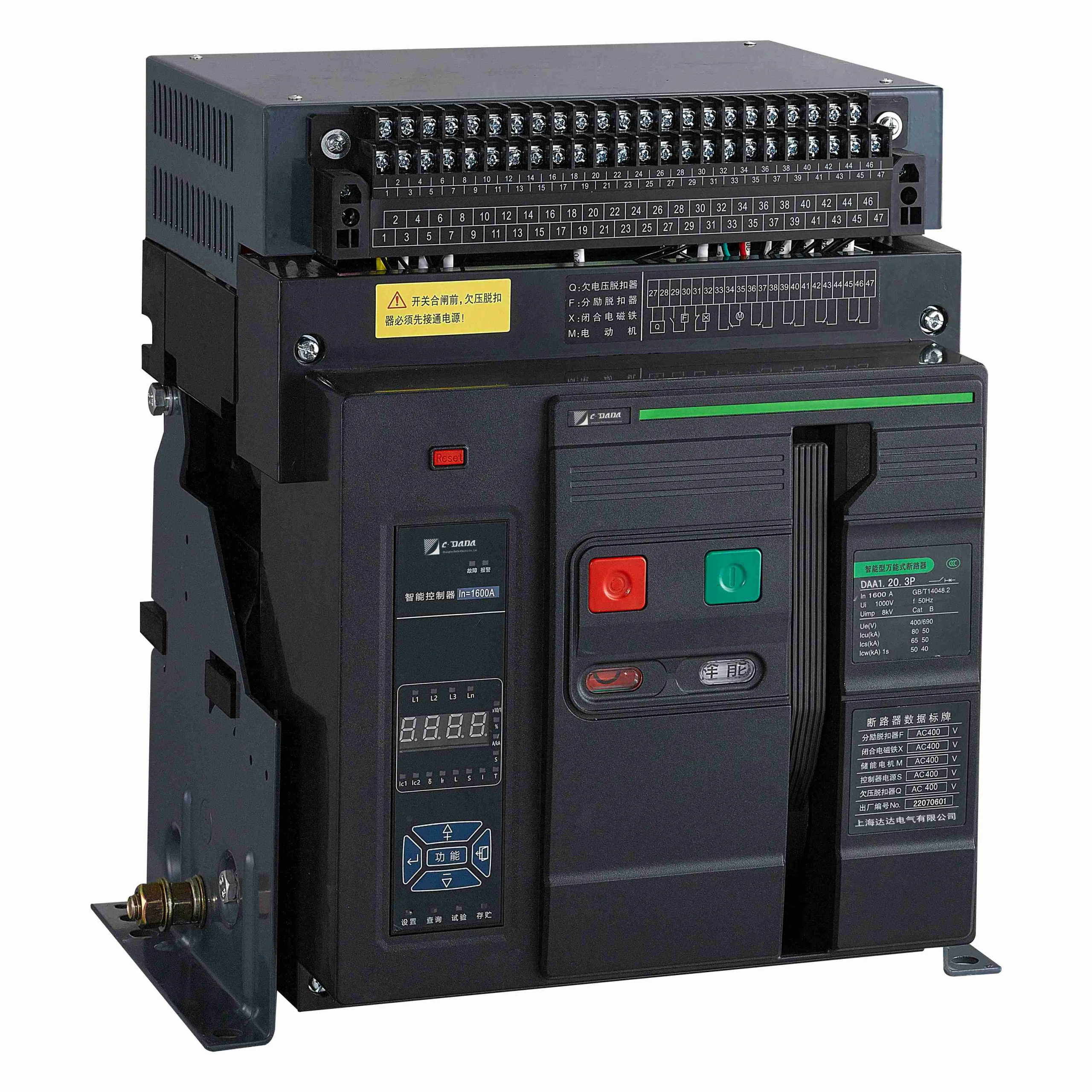
An air circuit breaker is a mechanical switching device designed to connect, carry, and disconnect current under normal circuit conditions, as well as to automatically interrupt the circuit under specified abnormal conditions, such as overcurrents and short circuits. Its key feature is the use of air as an arc extinguishing medium, which effectively avoids the fire and explosion hazards associated with oil-based mediums, making it a safe choice for industrial applications.
An ACB’s functions go beyond simply opening and closing a circuit. It acts like a vigilant guardian, constantly monitoring the health of the power system. Its main responsibilities include: first, acting as a switch for routine on/off operations under normal conditions. Second, and most critically, is its powerful fault protection capability. This is primarily seen in its precise protection against overloads, short circuits, and ground faults. When a system abnormality occurs, the ACB can respond quickly to interrupt the circuit and prevent the fault from escalating. Finally, it also provides power isolation, ensuring the safety of workers during maintenance or inspection.
To understand how an air circuit breaker works, we must first look at its intricate internal structure. A typical ACB consists of multiple core components working together, each with a specific function.
Let’s delve deeper into the functions of these components. The Main Contacts are the path for normal current flow, composed of a stationary contact and a moving contact that conduct electricity when closed. However, when the current is interrupted, an arc forms between the contacts. This is where the Arc Extinguishing System comes into play. This system, particularly the arc chamber and arc splitter plates, is a core technology of the ACB. It effectively extinguishes the arc by dividing it into multiple segments and cooling them rapidly.
Furthermore, the Operating Mechanism is the “executor” that controls the opening and closing of the contacts. Whether it’s through spring-energy storage, motor-driven, or manual operation, it ensures a fast and reliable switching action. The Trip Unit, acting as the “brain,” is responsible for sensing fault signals and issuing commands. Traditional trip units include electromagnetic types (for short-circuit protection) and thermal types (for overload protection). Modern technology has introduced smart electronic trip units, which provide more precise protection and offer remote monitoring and diagnostic capabilities, greatly enhancing the system’s intelligence. Finally, the sturdy Frame and Enclosure provide structural support for all internal components, protecting them from environmental factors.
For a more intuitive understanding of how an ACB operates, we can break it down into three main stages.
Essentially, during normal operation, the air circuit breaker is in a closed position, with its main contacts in close contact, allowing current to flow smoothly without interruption. In this stage, it simply acts as a switch, providing a continuous power supply to the downstream equipment.
This stage is when the ACB’s protective capabilities are put to the test. When an abnormality occurs in the circuit, such as the current exceeding its rated value, the trip unit is immediately activated. For an overload fault, the trip unit uses a thermal effect to trigger a delayed response when the current remains high for an extended period, preventing false tripping due to brief current fluctuations. For a short-circuit fault, when there is a sudden current surge, the electromagnetic component in the trip unit reacts almost instantaneously to issue a disconnection command. Additionally, modern ACBs can detect imbalanced ground fault currents and act quickly to protect both equipment and personnel.
Arc quenching can be described as the “soul” of the air circuit breaker. Once a fault is detected and the disconnection command is issued, the main contacts separate rapidly. This high-voltage separation generates a powerful electrical arc. If this arc is not extinguished quickly, it can cause severe erosion to the contacts and lead to a more serious accident. In an ACB, the operating mechanism quickly pulls this arc into the arc chamber. Inside the arc chamber, a series of insulated arc splitter plates act like blades, cutting the arc into multiple segments. As the arc is stretched and segmented, its voltage drop and resistance increase rapidly. Simultaneously, the surrounding air cools the arc, dissipating its energy and ultimately extinguishing it completely, thereby safely interrupting the circuit.

In practice, air circuit breakers can be categorized into different types based on their arc extinguishing methods and applications. Each type has its unique advantages.
The plain brake type ACB is the most basic design. Its working principle is straightforward: when the contacts separate, the resulting arc is elongated and naturally extinguished. This type is typically used in low-voltage AC and DC circuits. Its simple structure and lower cost make it suitable for applications where high breaking capacity is not a primary requirement.
The magnetic blowout type ACB enhances arc extinguishing efficiency by introducing a magnetic field. When an arc forms, blowout coils generate a powerful magnetic field that pushes the arc toward the arc chamber, aiding in its elongation and faster extinguishing. This type is suitable for equipment with voltages below 11kV, offering improved arc extinguishing capability while maintaining a high-cost performance ratio.
The air chute ACB has a more sophisticated design, featuring two sets of contacts: main contacts and arcing contacts. During a disconnection, the main contacts separate first, transferring the current to the arcing contacts, which protects the main contacts from arc damage. Once the arc forms on the arcing contacts, it is blown into an air chute where it is stretched and cooled. This type is primarily used in high-voltage applications, with ratings up to 420 kV, providing exceptional protection.
Finally, the air blast circuit breaker uses a high-pressure air blast to extinguish the arc. When the breaker opens, a high-pressure air stream is jetted from a nozzle, directly blowing the arc away from the contacts and extinguishing it. This method offers fast arc extinguishing and high breaking capacity, making it suitable for medium-to-high voltage equipment with ratings up to 15kV.
In summary, the air circuit breaker has become a critical device for ensuring the safety of power systems, thanks to its efficient arc extinguishing principles and reliable fault protection capabilities. As a respected nationwide manufacturer and exporter of low voltage circuit breakers, DADA ELECTRIC is committed to integrating the latest technology into our product designs to ensure that our breakers have superior performance and reliability.
We understand that every power system has unique needs. Therefore, DADA ELECTRIC not only provides high-quality standard products but also offers customized solutions based on your specific requirements. We sincerely invite you to contact our team of experts to work together in creating a safer and more efficient power environment for your facility.

 0086-15167477792
 charlotte.weng@cdada.com

No.171 Yezhuang Road, Zhuanghang, Fengxian, Shanghai, China