Home > Company News > A Comprehensive Guide to Miniature Circuit Breaker (MCB) Installation in Your Home
A Comprehensive Guide to Miniature Circuit Breaker (MCB) Installation in Your Home
Introduction
Welcome to Shanghai Dada Electric Co., Ltd., a trusted name in electrical safety and innovation. For decades, we have been at the forefront of developing electrical components that protect homes, businesses, and infrastructure across China and beyond. Central to modern electrical safety in any residence is the Miniature Circuit Breaker, or MCB.
This guide is designed to provide you with a thorough understanding of what an MCB is, how it functions, and the critical steps involved in its proper installation. While we empower you with knowledge, we must emphasize that electrical work can be extremely dangerous. Installation or replacement of MCBs in your main distribution board should only be performed by a qualified and licensed electrician. This guide serves an educational purpose to help you understand the process, communicate effectively with professionals, and appreciate the engineering that keeps your home safe.
Chapter 1: Understanding the MCB – The Guardian of Your Electrical Circuit
Before delving into installation, it’s crucial to understand the device you’re working with.
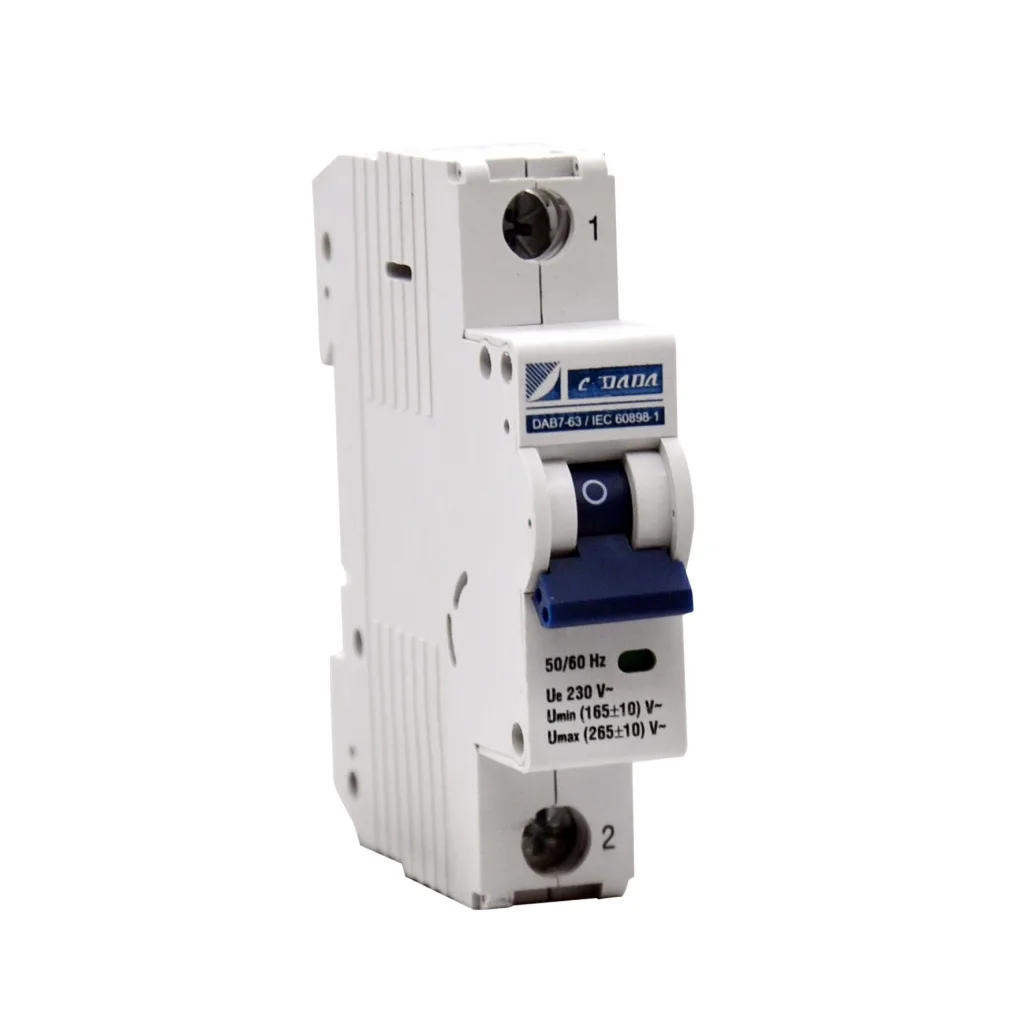
1.1 What is an MCB? A Miniature Circuit Breaker(MCB) is an automatically operated electrical switch designed to protect an electrical circuit from damage caused by overcurrent. Its primary function is to interrupt current flow after a fault is detected. Unlike an old-fashioned fuse, which must be replaced once it operates, an MCB can be reset (either manually or automatically) to resume normal operation, offering superior convenience and safety.
1.2 Why are MCBs Essential? They protect against two primary hazards:
Overload: This occurs when too many appliances are drawing power on a single circuit, causing the wires to heat up beyond their safe capacity. Over time, this can degrade insulation and lead to fires.
Short Circuit: This is a more severe fault where a “live” or “hot” wire comes into direct contact with a “neutral” wire or a grounded part of the system. This creates a path of very low resistance, causing an massive, instantaneous surge of current that can generate extreme heat, sparks, and potentially cause catastrophic equipment failure or electrical fires.
1.3 Key Components of an MCB:
Switch Lever: Allows for manual ON/OFF control of the circuit.
Bimetallic Strip: A temperature-sensitive strip that bends when heated by an overload current. This bending action triggers the mechanism to trip the switch.
Electromagnet (Solenoid): A coil that generates a strong magnetic field when a massive short-circuit current passes through it. This magnetic force instantaneously pulls a lever to trip the mechanism.
Trip Mechanism: The mechanical assembly that is triggered by either the bimetallic strip or the electromagnet to disconnect the contacts.
Arc Chute: A set of metal plates that split, cool, and extinguish the electric arc that forms when the contacts separate under load. This is a critical safety feature patented by Dada Electric for enhanced durability.
Terminals: Input (line) and output (load) connection points for the wires.
Chapter 2: Pre-Installation Planning and Safety
Proper planning is the foundation of a safe and code-compliant installation.
2.1 Safety First: The Non-Negotiable Protocol
Power Down: The single most important step. You must turn OFF the main circuit breaker that supplies power to the entire distribution board. This isolates the board, making it safe to work on.
Lock Out, Tag Out (LOTO): Use a lockout tagout kit to physically lock the main switch in the OFF position and place a tag warning others not to turn it on. This prevents accidental re-energization.
Verify Zero Power: Use a voltage tester or multimeter on the terminals inside the board to double-check that there is no voltage present. Test on a known live circuit first to ensure your tester is working correctly.
Personal Protective Equipment (PPE): Always wear appropriate PPE, including safety glasses with side shields and insulated electrical gloves.
Work in a Dry Environment: Ensure the area around the distribution board is completely dry.
2.2 Tools and Materials Required
A licensed electrician
Voltage tester / Multimeter
Insulated screwdrivers (various sizes)
Wire strippers
MCBs from a reputable manufacturer (e.g., Shanghai Dada Electric)
Appropriate gauge copper wiring
Distribution Board (Consumer Unit) with a DIN rail
2.3 Selecting the Right Dada Electric MCB Choosing the correct MCB is paramount.Using the wrong type can lead to inadequate protection or nuisance tripping.
Current Rating (Amperes, A): This is the maximum current the MCB can carry without tripping under normal conditions. It must be selected based on the current-carrying capacity of the circuit cable, not the appliance plug. Common ratings for homes are 6A (lighting), 16A (sockets), 20A (kitchen appliances), and 32A (cooktops).
Tripping Characteristic (Curve): This defines the MCB’s response time to overloads and short circuits.
Type B (B-Curve): Trips between 3-5 times full load current. Ideal for residential applications with resistive loads (lighting, heaters, sockets) and minimal inrush current.
Type C (C-Curve): Trips between 5-10 times full load current. Used for circuits with inductive loads that have moderate inrush currents (air conditioners, small motors, fluorescent lighting).
Type D (D-Curve): Trips between 10-20 times full load current. Reserved for circuits with very high inrush currents (large motors, transformers, industrial equipment).
For most home applications, Dada Electric recommends Type B or Type C MCBs.
Breaking Capacity (kA): This is the maximum fault current the MCB can safely interrupt without being destroyed. For standard home installations, a 6kA rating is typically sufficient. Dada Electric MCBs often exceed this standard for an added safety margin.
Number of Poles: Single-pole (SP) for phase wire only, Double-pole (DP) for both phase and neutral control.
Chapter 3: Step-by-Step Installation Procedure
WARNING: This procedure is for illustrative purposes. Execution must be done by a qualified electrician.
Step 1: Complete Isolation and Verification As outlined in Section 2.1,turn off the main breaker, apply LOTO, and use your voltage tester to confirm the board is dead. Test between the busbar terminals and earth, and between the neutral bar and earth.
Step 2: Mounting the MCB Shanghai Dada Electric MCBs,like most modern breakers, are designed to snap onto a standard 35mm DIN rail inside the distribution board. Position the MCB at the desired location, hook the top clip onto the rail, and press firmly at the bottom until you hear a click, indicating it is securely locked in place.
Step 3: Wiring the Circuit
Circuit Identification: Identify the existing or new circuit cable. The phase (live) wire is typically brown or red. The neutral is blue or black, and the earth is green/yellow.
Preparing the Wires: Using wire strippers, strip approximately 10-12mm of insulation from the end of the phase wire that will connect to the MCB. Ensure no stray strands are present.
Making Connections:
Input (Line) Side: The phase wire from the main supply (via the busbar) is connected to the upper terminal of the MCB. For a single-pole MCB, the neutral wire will go directly to the neutral busbar.
Output (Load) Side: The phase wire going out to your lights or sockets is connected to the lower terminal of the MCB.
Tightening Terminals: Insert the bare wire end fully into the terminal. Using an insulated screwdriver, tighten the terminal screw firmly. A proper connection is crucial—a loose connection can lead to arcing, heat buildup, and fire. Do not overtighten, as this can damage the wire or the terminal.
Neutral and Earth Connections: Connect the circuit’s neutral wire to the neutral busbar and the earth wire to the earth busbar. Ensure all connections are tight and secure.
Step 4: Connecting to the Busbar The input power for the MCB is usually provided by a busbar—a solid copper strip that runs behind the MCBs and distributes power from the main breaker.The Dada Electric MCB is designed with a clip or slot that makes a secure connection with this busbar when snapped into place. The electrician will ensure this connection is secure.
Step 5: Final Checks Before Energizing
Visual Inspection: Check that all wires are connected to the correct terminals and are secure.
Tug Test: Gently tug on each wire to ensure it is held fast by the terminal screw.
Clear Path: Ensure no tools, wire clippings, or other foreign objects are left inside the panel.
Barrier Replacement: Ensure the cover of the distribution board can be replaced without pinching any wires.
Step 6: Restoring Power and Testing
Remove LOTO devices.
Turn the main breaker back ON.
Flip the new MCB switch to the ON position.
Functional Test: Plug a lamp or tester into the circuit to verify it is receiving power.
Trip Test: It is good practice to test the MCB’s functionality. Press the ‘TEST’ button found on many modern Dada Electric MCBs. This should instantly trip the breaker, simulating a fault and confirming the mechanism is working. Reset it afterwards.
Chapter 4: Common Installation Mistakes to Avoid
Incorrect MCB Rating: Using a 32A MCB on a lighting circuit wired with 1.5mm² cable is dangerous. The cable could overheat and catch fire before the MCB trips.
Loose Connections: The most common cause of thermal problems within a board. Always torque connections to the manufacturer’s specification.
Double Lugging: Inserting two wires into a single MCB terminal designed for one. This creates a poor and unsafe connection.
Ignoring Polarity: Connecting the load to the line terminal and vice-versa. While the MCB may still trip on a fault, it leaves the downstream circuit permanently live when switched off, creating a shock hazard during maintenance.
Mixing Wire Types: Using aluminum wire with terminals designed for copper, or vice-versa, without the proper anti-oxidant paste or connectors, can lead to galvanic corrosion and connection failure.
Chapter 5: Troubleshooting and Maintenance
Frequent Tripping: Don’t just reset it repeatedly. Identify the cause. Unplug all appliances and reset. If it holds, an appliance is likely faulty. If it trips immediately, there may be a short circuit in the wiring. Consult an electrician.
Visual Inspection: Periodically (with power OFF), an electrician should check for signs of overheating (discoloration, melting) on the MCB or surrounding wires.
Operational Test: Use the TEST button every 2-3 months to ensure mechanical functionality. Dada Electric MCBs are designed for thousands of reliable operations.
Chapter 6: The Dada Electric Difference
When you choose an MCB from Shanghai Dada Electric, you are selecting a product engineered for unparalleled safety and reliability.
Rigorous Testing: Every MCB undergoes over 100 quality checks, including high-current trip tests, endurance tests, and environmental stress tests.
Advanced Arc Quenching: Our proprietary arc chute design ensures faster arc extinction, protecting the contacts and increasing the lifespan of the MCB.
Superior Materials: We use high-purity silver-cadmium oxide contacts for low resistance and high weld resistance, and high-quality thermoset plastics for superior thermal and dielectric strength.
Compliance and Certification: All our products meet or exceed relevant international and Chinese standards, including CCC, CE, and IEC 60898-1, giving you complete peace of mind.
Conclusion
The proper selection and installation of Miniature Circuit Breakers are not merely a technical requirement but a fundamental aspect of home safety. We hope this detailed guide has provided valuable insight into the critical role MCBs play and the careful process behind their installation.
At Shanghai Dada Electric Co., Ltd., our mission is to provide components that protect what matters most—your home and your family. By combining quality products with professional installation, you build a robust electrical system designed for safety and performance.
For further technical specifications, product catalogs, or to find a certified installer using Dada Electric products, please visit our website or contact our customer support team.


 0086-15167477792
 charlotte.weng@cdada.com