In modern electrical systems, safety and reliability are essential. One important component that ensures both is the air circuit breaker (ACB). It is mainly used in low-voltage power distribution to protect equipment and wiring from overloads, short circuits, and ground faults. ACBs automatically interrupt the circuit when they detect an abnormal condition, preventing damage and ensuring continuous system stability.
To better understand how ACBs function in different environments, it’s important to look at the main types of air circuit breakers and their applications in industrial and commercial systems.
Air circuit breakers can be classified in several ways — by their arc extinction method, construction, or installation style. Each type is designed to perform under specific operating conditions. Some air circuit breakers are intended for light-duty protection, while others are built for high-current or heavy industrial use.
Understanding the basic ACB types helps engineers and facility managers choose the right model for their power systems. The following sections describe the most common kinds of air circuit breakers used today.
The plain break air circuit breaker is the most basic type. It relies solely on air as the medium for extinguishing the arc formed when the contacts open. When an overload or short circuit occurs, the contacts separate and the arc is drawn between them. Air helps cool and extinguish the arc naturally.
This type of breaker is simple in design and inexpensive, making it suitable for small electrical panels or testing setups. However, since its arc-quenching ability is limited, it is not ideal for high-current or high-voltage applications. As electrical systems grew more complex, improved designs like magnetic blowout and air chute types were developed to handle greater power safely.
The magnetic blowout air circuit breaker introduces a magnetic field to help extinguish the arc. When current flows through the contacts, the magnetic coil generates a field that forces the arc away from the contact area. This helps break the circuit faster and reduces contact wear.
This type of ACB provides better arc control and is suitable for medium to high current systems such as industrial control circuits and motor protection. Compared to the plain break type, it offers higher reliability and improved performance under heavy-duty operating conditions.
With its strong arc-quenching capability, the magnetic blowout ACB has become a common choice for industrial circuit protection.
As electrical systems require greater fault protection, the air chute type circuit breaker offers a more advanced solution. It contains metal plates that divide and cool the electric arc into smaller parts, allowing it to extinguish more quickly. The metal plates absorb the arc’s heat and limit its movement, improving safety and reducing potential damage to contacts.
This design makes air chute ACBs well suited for high short-circuit current environments, including power plants, substations, and manufacturing facilities. They combine durability and efficiency, which is essential for maintaining uninterrupted operations in critical installations.
Because of their superior arc control, air chute breakers are often used in industrial and utility-grade power systems.
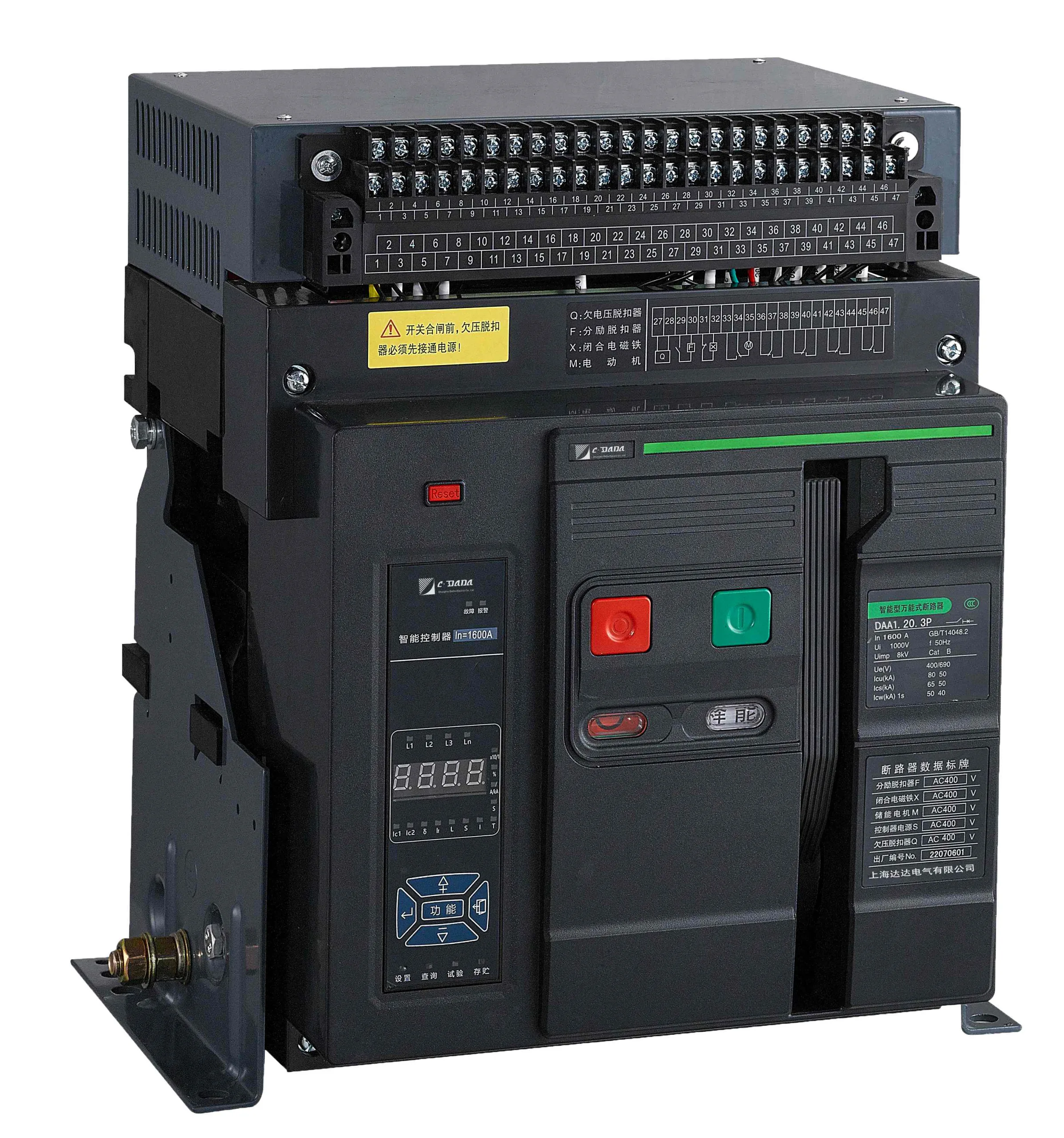
Another way to classify ACBs is by their mounting style — fixed type and draw-out type. A fixed type ACB is permanently installed in the panel. It is simple and cost-effective but requires the entire system to be powered down for maintenance or replacement.
In contrast, the draw-out air circuit breaker can be easily removed or inserted into its compartment without disconnecting the whole system. This makes maintenance faster and safer, especially in environments that demand continuous operation. Draw-out ACBs are commonly used in data centers, commercial buildings, and industrial switchgear systems, where reliability and serviceability are crucial.
Both types serve important roles depending on the system design and maintenance needs.
Different types of air circuit breakers are used for different electrical protection needs:
In general, ACBs are used in factories, power stations, data centers, and large commercial buildings. They ensure that any fault or overload is isolated immediately, reducing the risk of equipment damage and fire hazards. The wide range of available types allows ACBs to meet diverse operational requirements efficiently.
Selecting the correct ACB depends on several key factors such as current rating, voltage level, installation space, and maintenance frequency. Engineers should also consider the type of load, fault current capacity, and required protection features.
For example, systems with high fault currents may need air chute ACBs, while smaller distribution panels can use magnetic blowout or plain break ACBs. Facilities that cannot afford downtime often prefer draw-out ACBs for easy servicing. Choosing the right air circuit breaker not only ensures proper ACB protection but also enhances the overall reliability and efficiency of the power network.
Air circuit breakers play a vital role in protecting electrical systems from overcurrent and short circuit damage. From simple plain break models to advanced air chute and draw-out types, each design offers specific advantages for different applications.
By understanding the main types of air circuit breakers and their applications, businesses can improve safety, reduce maintenance costs, and ensure long-term operational stability.
For reliable air circuit breakers and advanced circuit protection solutions, contact DADA — your trusted partner in electrical safety and industrial power systems.

 0086-15167477792
 charlotte.weng@cdada.com

No.171 Yezhuang Road, Zhuanghang, Fengxian, Shanghai, China


